A stretch of Broadway has been closed off to vehicles since January 2026 for the Broadway Subway Project, and further closures are soon to come. Although the B.C. government announced that the road-restoration will be wrapped up ahead of time, drivers should expect detours to return in the following months.
RELATED: Vancouver’s Science World Is Transforming Its Dome Into The FIFA World Cup Official Match Ball
Broadway Subway Project Road Closures
The Broadway Subway Project is an extension of the Millennium Line, extending it from VCC-Clark Station to Broadway and Arbutus.
If you’ve driven anywhere from Main Street to Quebec Street, you’ll definitely have seen the construction. Recently, the B.C. government said that “short, targeted vehicle detours during Broadway Subway construction are minimizing the time that residents, businesses and commuters are affected by the work, getting Broadway restored sooner.”
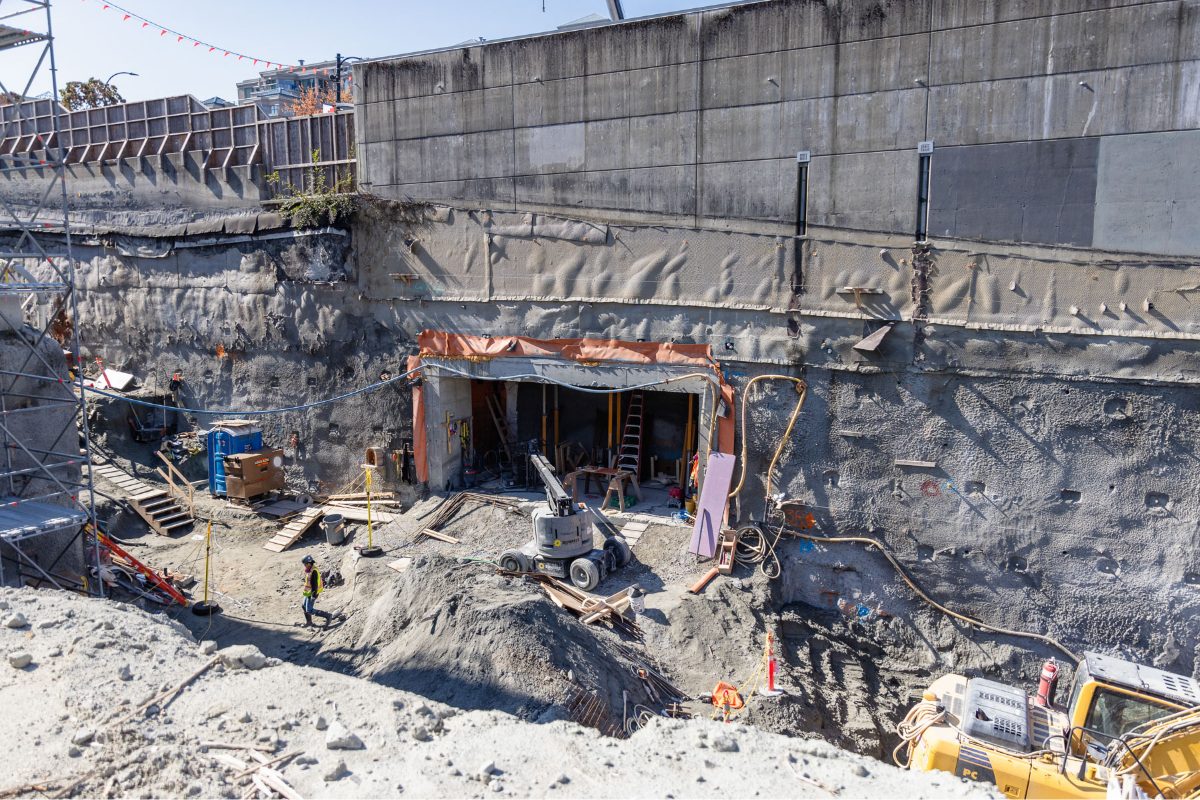
According to the province, these detours were able to reduce road-restoration time by more than 50% when compared to working without a detour. All four lanes are expected to open in July 2026 instead of September 2026, months ahead of schedule.
More Detours
Project teams have since worked with the City of Vancouver and TransLink to assess if a similar approach could be applied to other stations. It’s been confirmed that a detour will be implemented between Alberta Street and Cambie Street so that Broadway-City Hall traffic deck removals can begin this summer.
The detours will “reduce the duration of disruption at this location by more than half. Businesses will remain fully accessible as sidewalks remain open with parking available nearby.”
Work won’t begin until after the FIFA World Cup, though, as traffic is expected to be high during the event. Two weeks’ notice will be given to businesses and commuters in the area before work starts.
“Without a detour, this was expected to take about 14 months,” said the province. Instead, it will take 6 months.
The Broadway Subway is expected to open in fall 2027 and “improve transit reliability, reduce congestion and support a growing region.”