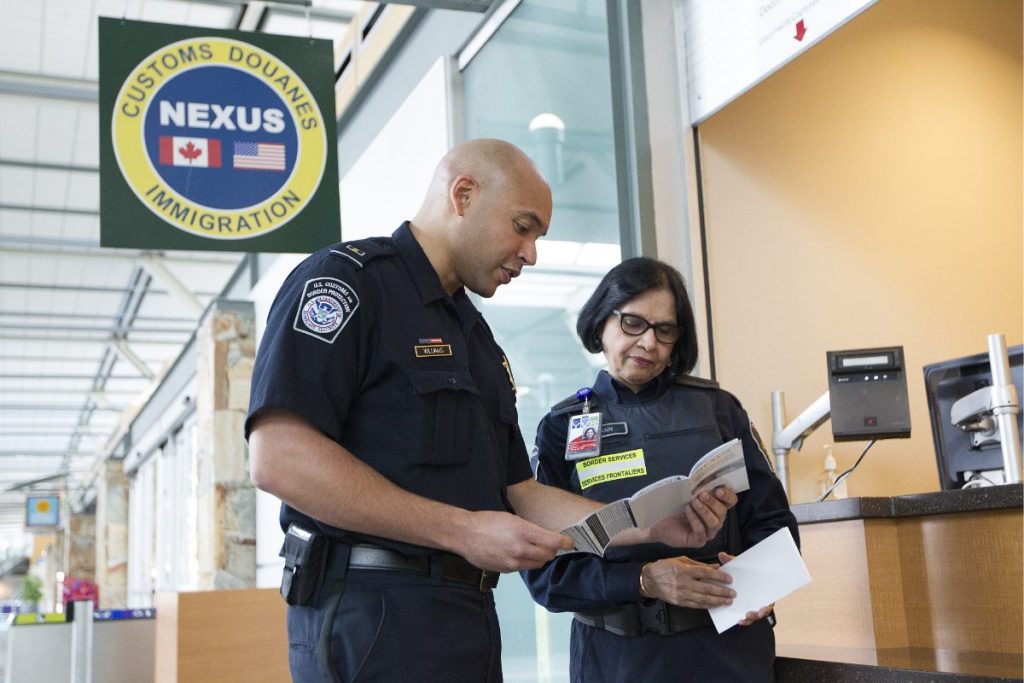
A recent notice from the U.S. Customs and Border Protection (CPB) has many Canadians wondering exactly what their rights are when they’re crossing the border.
Whether you’re wondering if they can demand your social media history or if they can actually check your phone, here’s what you need to know before heading south.
Mandated Social Media Checks
As of now, the notice is exactly that– a notice– but there is still a chance that the U.S. could soon be implementing mandated social media checks for visitors who are part of the Visa Waiver Program (VWP), which includes about 40 nations such as Germany, France, and Greece. Visitors from these countries are required to have a valid Electronic System for Travel Authorization (ESTA) prior to travel.

The primary part of the CBP’s notice is looking to adjust the ESTA application process. It plans to include “mandatory social media” and “high value data elements” as part of the application. Moreover, visitors to the U.S. will be required to “provide their social media from the last 5 years.”
Your Rights As A Canadian At The U.S. Border
These potential regulations apply explicitly to visitors that are part of the VWP. Canada is one of the few countries that do not need a nonimmigrant visa to head to the U.S., so the CBP’s notice will not directly affect Canadians. But while Canadians won’t have to provide their social media through a visa application, that doesn’t mean that they will not be questioned at the border for it.
You, as a Canadian, have a few options to prevent your electronics from being checked.

One solution is to wipe your social media apps from your phone, or to use a burner phone. Although, these may be suspicious indicators to border agents as a person with absolutely no data on their device is immediately strange.
Your other option is to refuse to show border officers your device, which is your right to do so. This will most likely result in you being refused entry into the country, though.
In all, plenty of Canadians cross the border with no trouble at all each day. Still, it is important to know that you are a visitor into the U.S. It is your right to refuse a search, though it should be expected to not be able to enter afterwards. To truly prevent any trouble with border agents, it’s best to remain calm and cool.