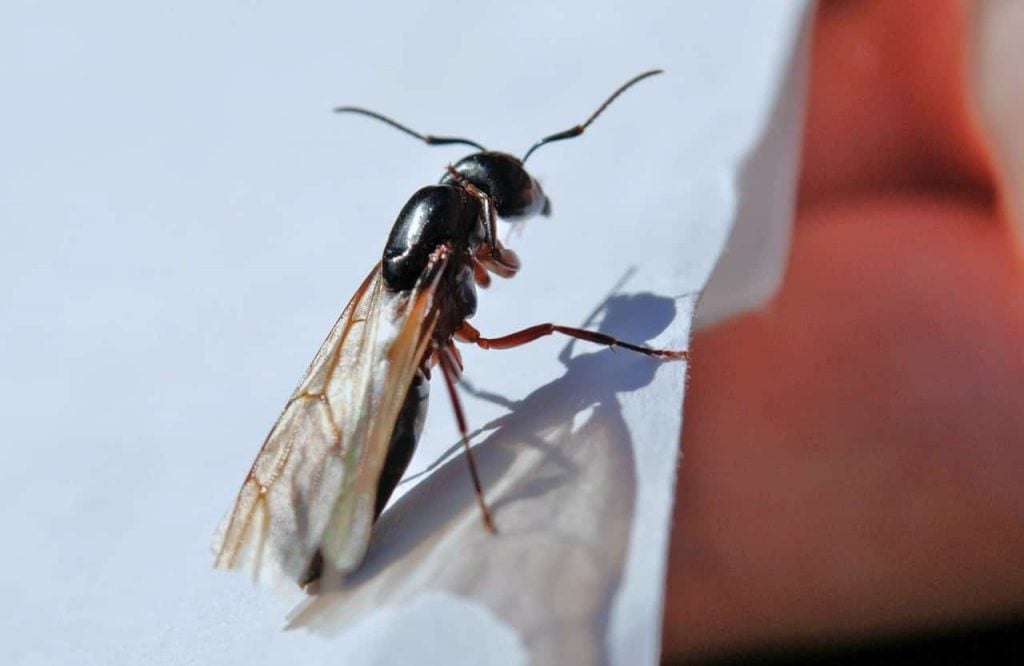
If you’ve stepped outside lately and noticed what seems like a swarm of winged insects filling the air, you’re definitely not imagining things.
Across Metro Vancouver, residents have been spotting large numbers of flying ants gathering around sidewalks, parks, backyards, and even buzzing around windows and balconies.
This winged pest’s annual return is usually marked with a buzz as they overtake the local skies.
RELATED: Super El Niño Could Bring More Extreme Weather To Vancouver This Summer
Flying Ants Day
Many have dreaded the return of Flying Ants Day (season) in Metro Vancouver, but it finally started in early July and many local residents took to social media to share their encounters with the unsightly swarms.
They describe how the insects were coming out in mammoth mobs, and absolutely terrorizing unsuspecting pedestrians.
Not only did the bugs overtake the sky, but people describe how they flew into people’s faces, hair, and pretty much everywhere else.
Here’s Why You’re Suddenly Seeing So Many Flying Ants Around Vancouver Right Now
The sudden appearance of flying ants is known as a “nuptial flight.” During a short period each summer, mature ant colonies produce winged males and future queens that leave their nests at the same time to mate.
Once they’ve found a partner, the males die shortly afterward, while newly fertilized queens shed their wings and search for a suitable location to establish an entirely new colony.
In Metro Vancouver, these mass flights typically happen between late June and early August, with warm temperatures, higher humidity, and calm weather creating ideal conditions.
After a stretch of sunshine followed by mild, humid evenings, thousands of ants can take flight almost simultaneously, making it seem like they’ve appeared out of nowhere.
Although it can feel like an invasion, the spectacle usually lasts only a day or two in any one location.
How To Recognize Flying Ants
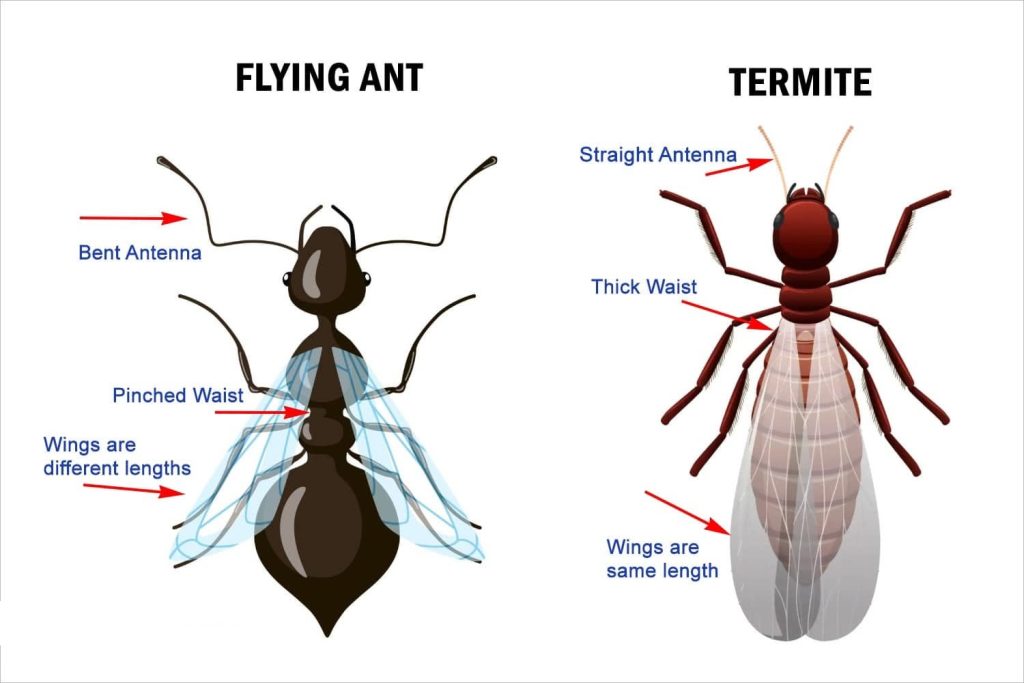
Flying ants are often mistaken for termites because both have wings. However, ants have narrow, pinched waists, bent antennae, and front wings that are noticeably longer than their back wings.
Termites, on the other hand, have straight antennae, thicker bodies, and four wings that are all roughly the same size.
Do They Bite?
The good news is that flying ants are generally harmless.
They don’t bite or sting most people, they aren’t interested in invading your home in large numbers, and they’re simply focused on reproducing before moving on.
In fact, ants play an important role in local ecosystems by helping aerate soil, dispersing seeds, and providing food for birds and other wildlife.
How to Get Rid of Them
If you’re finding them around your home, the best approach is usually to keep doors and windows closed or use screens while the swarm passes.
Turning off outdoor lights at night can also help, since winged ants are attracted to light sources.
If you notice large numbers emerging from inside your house instead of outdoors, however, it may be worth having the area inspected.
While most flying ants originate from outdoor colonies, repeated indoor swarms could indicate a nest within the structure.
For everyone else, the skies should return to normal fairly quickly.
So if your neighbourhood suddenly feels like it’s hosting an insect convention, don’t panic—it’s simply one of nature’s busiest matchmaking events happening right here in Vancouver.