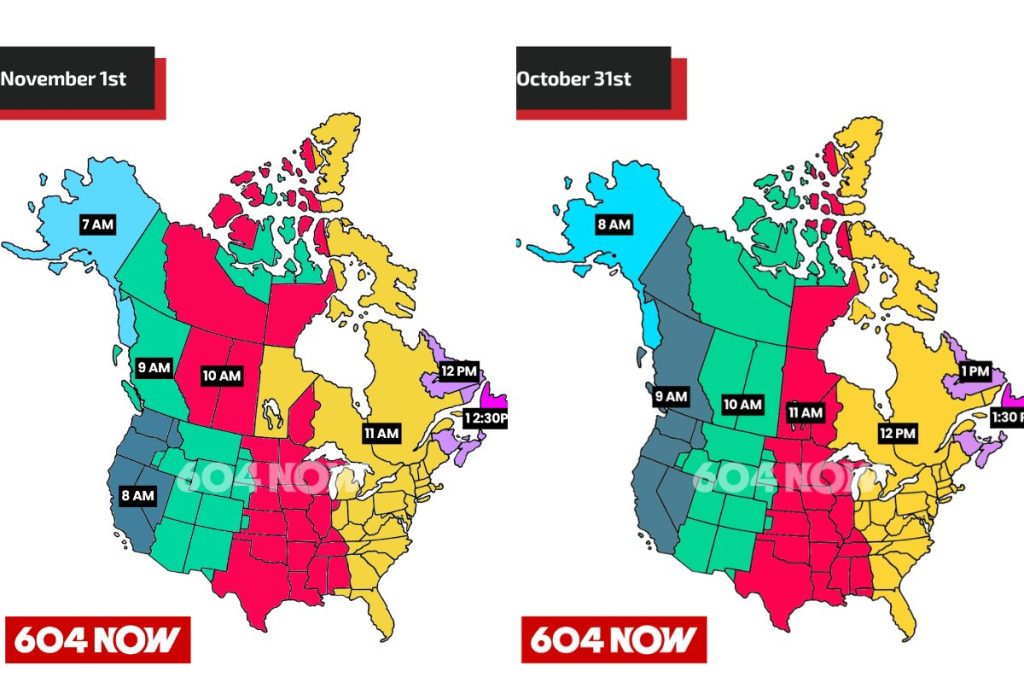
It’s that time of the year again when the clocks are meant to fall back, but B.C. won’t be doing that any longer, bringing changes to Canada’s time zones.
In March 2026, the provincial government announced that B.C. would be adopting permanent daylight saving time (DST). This marked 2026 as the final year the province would ever have to spring forward.
RELATED:
- Here’s When B.C. Could Get Its Snowiest And Coldest Weather This Winter
- Major Changes Are Coming To B.C.’s Borders– Here’s What To Know
But by adopting permanent DST, that means things will look a little different as the rest of the country falls back an hour while B.C. stays on the same clock. But don’t worry, we’ve got you covered with a time zone cheat sheet so you can figure out what the time is everywhere in Canada, starting this November.
Canada’s Time Zones
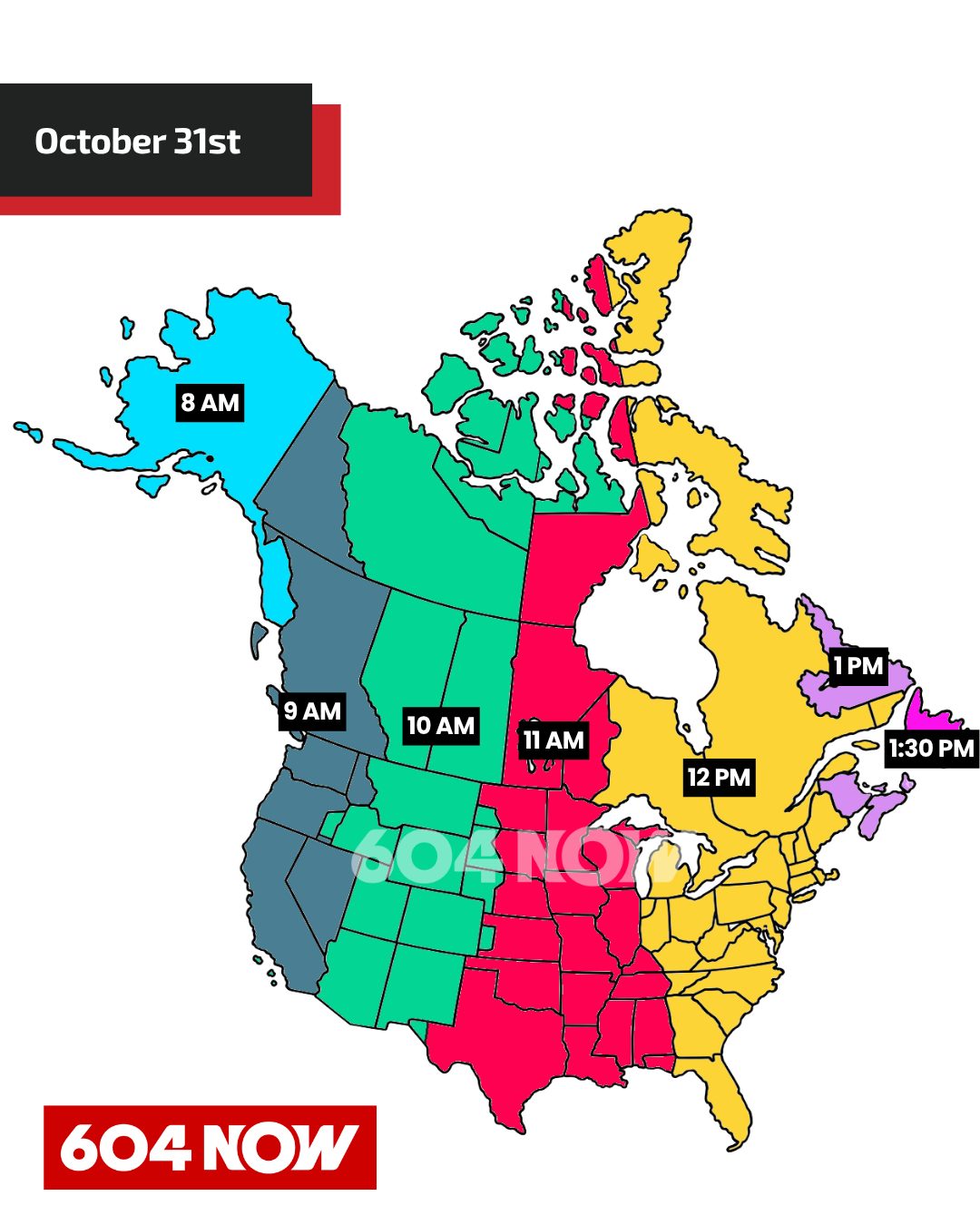
Alberta and Manitoba will also be joining B.C. in adopting permanent DST. As for the territories, the Northwest Territories will similarly stay on DST; and the Yukon already stopped observing time changes in 2020. Saskatchewan stopped their time changes all the way back in 1966.
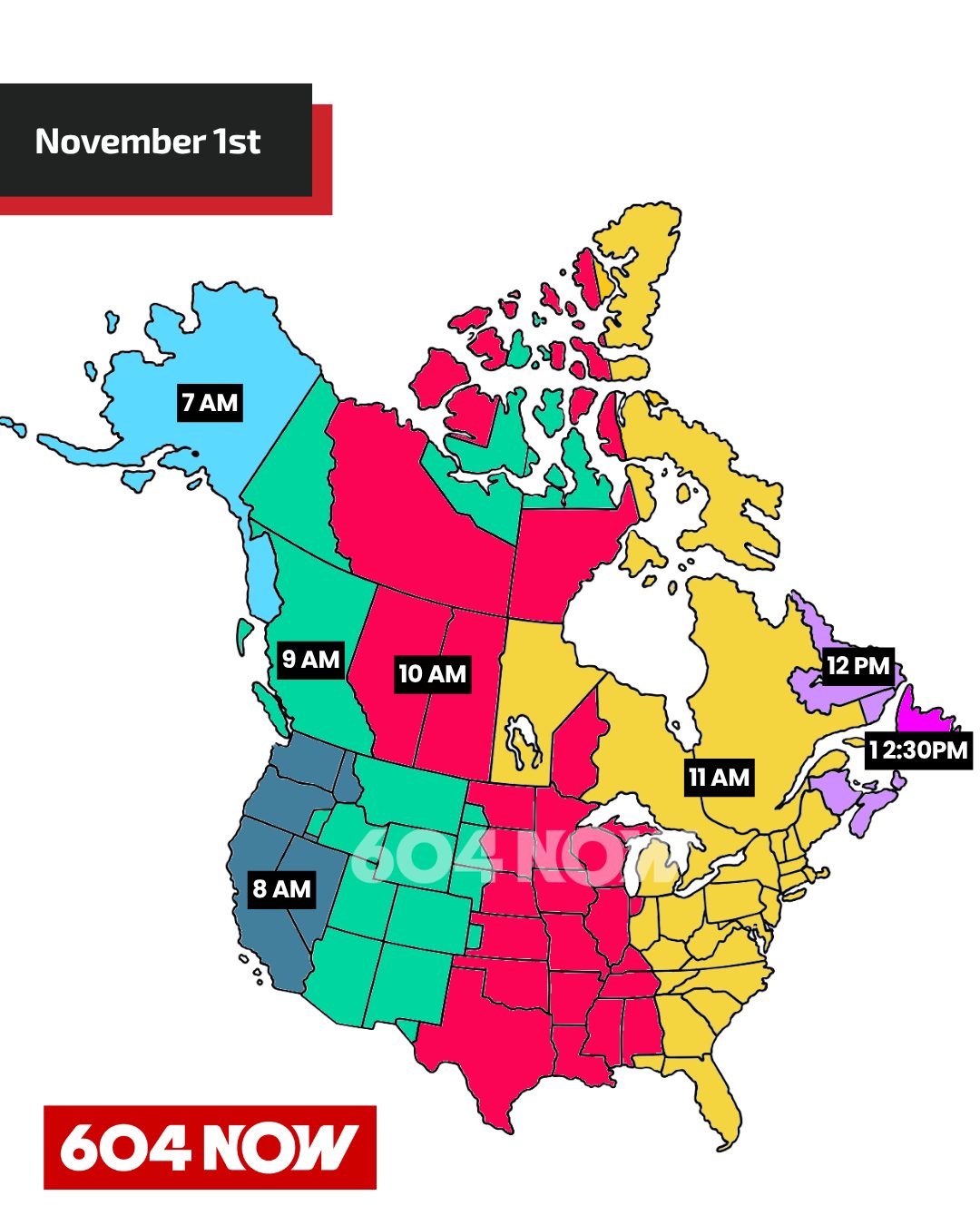
As everyone flips their calendars to November, you can probably expect some changes ahead. Whether that’s scheduling meetings with other people across the world or even border opening times, there’s plenty of reasons to keep these maps handy— just in case you need a reminder.