
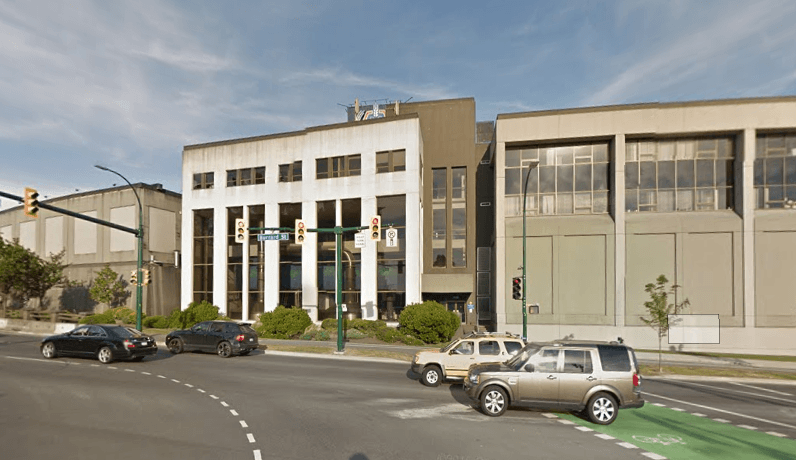
For years, the former Molson brewery site at 1550 Burrard St. has sat as one of Vancouver’s most prominent underused properties. Now, City Hall is taking early steps toward transforming the nearly eight-acre site at the south end of the Burrard Street Bridge into a high-density, mixed-use community.
However, the real decision may not rest solely with Vancouver City Council.
To understand what happens next, it’s important to look beyond City Hall and toward the broader authority of the Metro Vancouver Regional District.
A Rare Industrial Land Question
The Molson site is currently designated as industrial land under the region’s growth framework. That designation exists for a reason.
Across Metro Vancouver, industrial land is scarce. Vacancy rates remain extremely low. The region relies on industrial space to support port operations, logistics, film production, trades, food distribution, and construction staging. In many ways, industrial land functions as economic infrastructure.
Because of that, Metro Vancouver has historically taken a cautious approach to removing industrial protections. The regional government’s mandate is not just about housing. It is about long-term economic resilience across 21 municipalities.
This is why the Molson Lands proposal carries regional implications.
Why This Site Is Different
At the same time, not all industrial lands function equally.
The former brewery site sits at the eastern end of Cornwall Avenue, wedged between the Burrard Bridge and the Squamish Nation’s Senakw development. Unlike large industrial clusters in South Vancouver, Richmond, or Delta, the Molson property operates as a stand-alone site.
It has no direct rail access. It is not integrated into port logistics corridors. Dense residential neighbourhoods surround it on multiple sides. The nearby Senakw project will soon add thousands of rental homes just across the bridge.
Over the decades, False Creek has shifted away from heavy industrial use toward mixed-use urban neighbourhoods. The Molson site now represents one of the last remaining industrial designations in this area.
That context matters.
Metro Vancouver’s concern is often that removing one industrial site creates pressure to remove others. In this case, however, the Molson property appears physically and functionally isolated from the region’s core industrial network.
That distinction could make it a rare exception rather than a precedent.
More Than Just Housing
Early concepts for the site have suggested thousands of homes could be delivered, alongside approximately 300,000 square feet of job space. While final details would only be determined through a formal rezoning process, the framework envisions a mix of residential, office, retail, and public amenities.
Importantly, this is not simply about adding housing.
The south end of the Burrard Bridge is already undergoing major change. Senakw will bring up to 9,000 residents upon full buildout. Bridge improvements are planned to create a transit hub and bus priority infrastructure. The Broadway Plan area sits just beyond the site’s parking lot.
In that context, the former brewery lands could serve as a connective urban anchor. Mixed-use development here could help integrate Senakw’s new community with the rest of Vancouver while introducing employment space within walking distance of downtown.
That balance between housing and jobs is central to Metro Vancouver’s regional planning objectives.
A Regional Growth Strategy Test
Under the Metro 2050 Regional Growth Strategy, the site is designated “Industrial.” Changing that classification would require regional approval, including consultation and a public hearing process involving mayors and councillors from across Metro Vancouver.
This process exists to ensure that one municipality’s decision does not undermine regional economic needs.
However, regional planning also aims to direct growth toward transit-rich, centrally located sites. The Molson Lands sit at a key bridge gateway between downtown Vancouver and the broader region. They are minutes from major bus routes and cycling infrastructure, and near the future Broadway Subway extension.
From a growth management perspective, concentrating housing and jobs in such locations aligns with long-standing regional goals.
The question for Metro Vancouver, therefore, is not whether industrial land matters. It clearly does. The question is whether this particular site continues to function as strategic industrial land in a meaningful way.
Housing Pressure Across the Region
Metro Vancouver faces intense housing pressure. Population growth remains strong. Provincial housing mandates are reshaping local planning frameworks. Rental vacancy rates remain tight across the region.
Adding new supply near the urban core has regional implications. More housing near downtown can reduce long cross-bridge commutes. It can support transit ridership. It can ease pressure on suburban expansion.
In other words, this is not solely a Vancouver issue.
When housing supply increases in the core, it affects transportation patterns, labour mobility, and economic competitiveness across the region. Metro Vancouver’s board must weigh these broader impacts alongside industrial land protection.
A Decision About Fit

Ultimately, this debate is about land use fit.
Industrial land should remain protected where it supports port activity, manufacturing, and logistics. Those lands remain essential to the region’s economy.
But when a site becomes surrounded by residential towers, loses direct freight connectivity, and sits adjacent to major transit corridors, its functional role can change.
The Molson Lands appear to represent that shift.
That does not mean approval is automatic. The regional review process exists precisely to scrutinize such proposals. However, the site’s isolation and urban context may distinguish it from other industrial areas.
What Happens Next
At this stage, Vancouver City Council is being asked to initiate the process to amend land use policies for the site. Even if council supports that step, several layers of consultation and regional approval would still follow.
Metro Vancouver’s decision will be critical.
If the regional board determines that the Molson Lands no longer serve a strategic industrial purpose, the site could move forward into a full rezoning process that determines building heights, density, public benefits, and transportation upgrades.
If not, the industrial designation would remain.
Either way, this is a significant moment in the region’s ongoing conversation about balancing jobs, housing, and long-term economic infrastructure.
The former brewery once symbolized Vancouver’s industrial past. The question now is whether it should become part of Metro Vancouver’s next phase of urban growth.
And that decision extends well beyond the boundaries of Vancouver City Hall.
