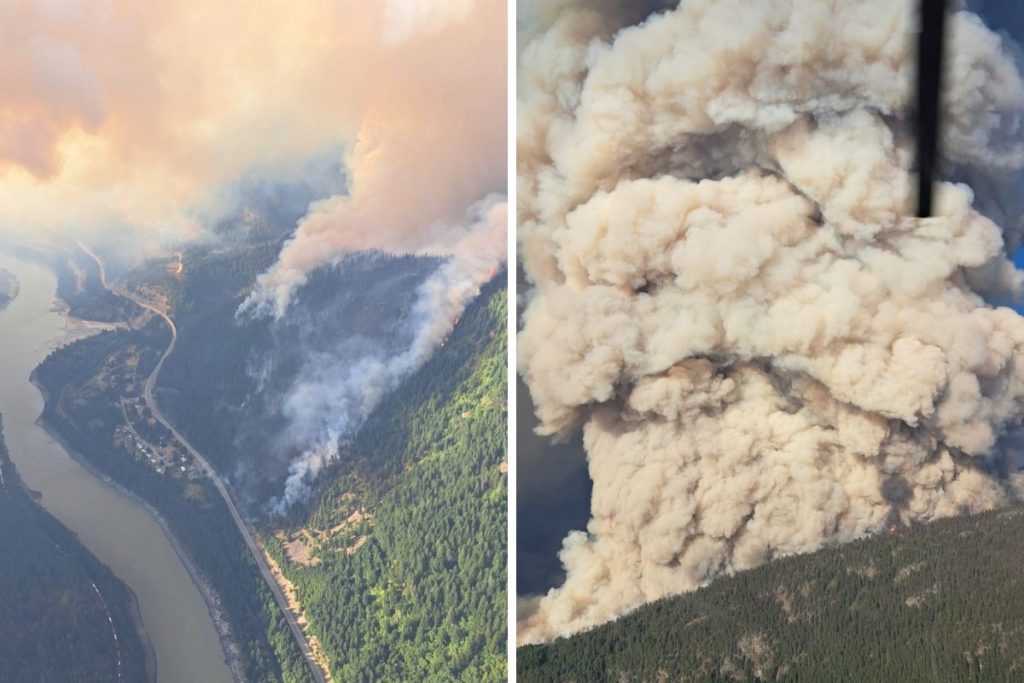
You may have noticed that the air quality in Vancouver has taken a steep dive recently. The skies have been extra hazy as of late, thanks to all the wildfires burning around the province.
Wildfire season happens every single year, but it’s gotten so bad that Metro Vancouver has officially issued warnings to alert the public about the current air quality.
RELATED: Canada’s Passport Continues To Sit Among The Top 10 Strongest, Outranking U.S.
Here’s what you need to know about the current air quality, and how you can prevent yourself from breathing too much wildfire smoke.
Air Quality Warnings in Metro Vancouver
According to IQAir, a website that ranks air quality, Vancouver has an air quality index of 61 The ranking system goes from 0 to 301+, with 0 being “good” and 301+ being “hazardous”. 61 is within the “Moderate” range. An index of 61 also places Vancouver as the 49th most polluted major city in the world right now.
Metro Vancouver warns, “Metro Vancouver Regional District has issued a yellow air quality warning due to elevated ground-level ozone (smog) and fine particulate matter (PM2.5).” The smog is expected to reach elevated levels particularly in eastern parts of Metro Vancouver and the Fraser Valley.
“Smoke from wildfires in British Columbia, including the Brunswick Complex wildfire near Boston Bar and the wildfires in the southern Interior, has increased concentrations of fine particulate matter (PM2.5) in all parts of Metro Vancouver and the Fraser Valley.”
How to Protect Yourself from Wildfire Smoke
The federal government recommends a number of measures you can take to protect yourself from wildfire smoke, including:
- reduce or reschedule strenuous activities outdoors
- pay attention to air quality information
- keeping windows and doors closed as much as possible. When there’s an extreme heat event occurring with poor air quality, prioritize keeping cool.
- limiting the use of exhaust fans, such as bathroom fans
- using the highest quality air filter that your ventilation system can handle based on the manufacturer’s recommendations
This is only a short list of measures, with many more listed by the federal government. For more information on protecting yourself from wildfire smoke, you can visit the page here.