
Talk to anyone in Vancouver who has a kid in their twenties. Odds are that kid is making one of three plans: move to Toronto, move to the States, or stay here and figure out how to afford a one-bedroom on a salary that won’t cover one. The third plan usually fails. The first two are the ones that work.
We talk about this as a housing problem. It’s also a jobs problem. And the jobs problem has a cause that almost nobody outside the tech world talks about: Vancouver doesn’t keep the companies it builds.
Slack, the workplace messaging app worth tens of billions of dollars, was started in Vancouver. It scaled in San Francisco. Hootsuite was built here, and most of its growth went south. AbCellera, Clio, General Fusion, the list goes on. Companies start in Vancouver, get to a certain size, and then realize they have to leave to keep growing. The capital is somewhere else. The customers are somewhere else. The infrastructure that makes scaling easier is somewhere else.
When those companies leave, the high-paying jobs leave with them. The $200,000 software engineering roles that fund families and mortgages and restaurants and small businesses end up in Seattle, San Francisco, and increasingly Toronto and New York. What stays here is the early-stage stuff: small teams, modest salaries, founders trying to make rent while they build. That’s important work, but it doesn’t sustain a city.
This is why your neighbour’s kid moved to Seattle. It’s why the friends from your daughter’s high school cohort are scattered across Brooklyn and Austin and the Bay. It’s why Vancouver feels increasingly like a beautiful place that exports its talent to cities with better economic infrastructure.
Other cities figured this out. We haven’t.
New York, Paris, London, Houston, even Tallinn in tiny Estonia have all built something Vancouver has not: permanent innovation hubs. Physical, operating spaces that bring founders, investors, big companies, and government people together every day. Not just at conferences. Every day. The result is companies that start in those cities tend to stay in those cities, because everything they need to grow is right there.
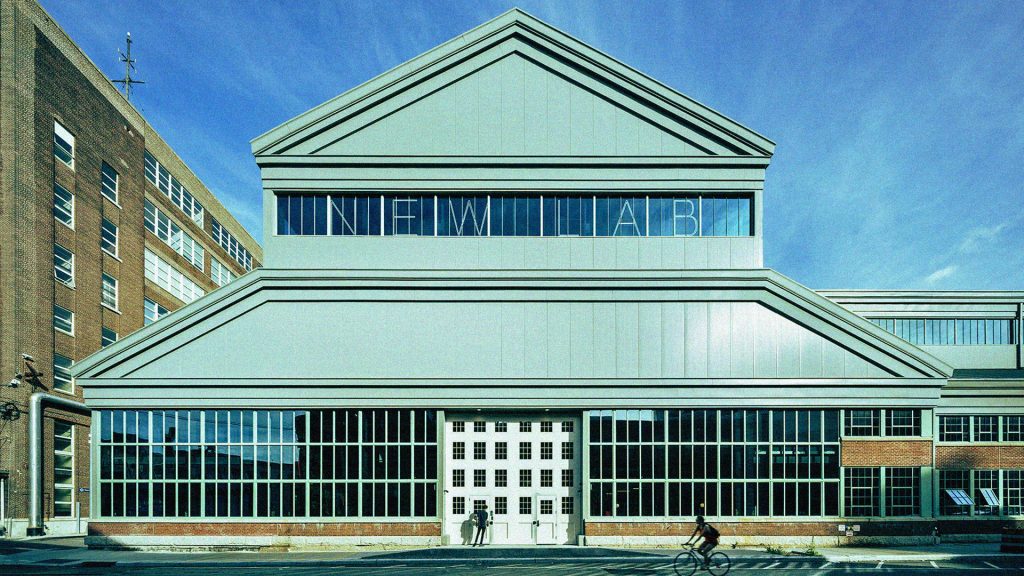
These places aren’t fancy coworking offices. They’re real infrastructure. Curated communities. Connected to capital. Anchored by a single accountable operator who makes sure the right people are meeting and the right deals are happening. Paris has Station F. New York has Newlab. They didn’t appear by accident. Their cities and governments decided they wanted to keep their innovation economy and built the infrastructure to do it.
Vancouver has had every chance to do the same and hasn’t. We’ve had programs and pilots and announcements, but no permanent home. Web Summit is bringing 15,000 people to our city next week, the second year in a row that the world is showing up to see what we’ve got. It’s worth noting that Web Summit didn’t end up here by accident either. It was Collision Conference in Toronto until local efforts helped attract it west, an estimated $275 million boost for Vancouver. That’s real money. It’s also a fraction of what a fully built innovation ecosystem would generate year after year. We can land big moments. We just haven’t built what it takes to keep them generating wealth every day in between.
This is fixable
Every leading innovation city built its hub on purpose. Vancouver could do the same. The blueprint is on the shelf. The local players, the global partners, the capital pathways, the international relationships are already in place. What’s missing is the political will to treat innovation infrastructure as essential public infrastructure, the same way we treat transit and housing.
If we keep waiting, the answer to “why did your kid move to Seattle” stays the same for another decade. If we act, this becomes the moment we finally built the city we keep telling ourselves we already are.
Web Summit is here next week. The world is watching Vancouver. The question is what we want them to see in five years: a city that hosted the future, or one that finally decided to keep it.
Dan Burgar is the CEO of Frontier Collective, a Vancouver-based platform building global innovation corridors.
