
Medical professionals are warning Canadians that Lyme disease isn’t the only illness you should be looking out for when it comes to ticks.
Published in the Canadian Medical Association Journal, a new paper is urging doctors to examine patients with unexplained fever for anaplasmosis as a potential diagnosis while tick-borne illness rise throughout Canada.
RELATED: Canadians Could Get Money From A Nearly $8-Million Beef Settlement
Tick-Borne Illnesses in Canada
Ticks are on the rise not only in B.C., but throughout Canada. As for Lyme disease, the Public Health Agency of Canada (PHAC) reported 5,200 preliminary cases in 2024, a steep climb from 2015’s 917 cases. Experts believe that this number is actually higher as many infections go unreported and undiagnosed.
Since winters are shorter and less cold, ticks are now able to thrive in northern latitudes.

But Lyme disease isn’t the only illness that ticks can pass on. According to senior author Dr. Michael Quon, an internal medicine specialist at The Ottawa Hospital, a 79-year-old man had a fever, chills, and generalized weakness that led to him falling summer. While the patient did not recall having a tick bite, his home in rural eastern Ontario meant that tick-borne diseases are endemic. He also often spent time in the woods.
The patient eventually made a full recovery after being given the antibiotic doxycycline, which covers a range of potential bacterial infections. This includes anaplasmosis, which is carried by black-legged ticks. Later, after treatment had started, lab results revealed that the patient had anaplasmosis.
Quon said in an interview that anaplasmosis isn’t an infection that hospitals encountered five years ago, but it’s now being observed more often in clinical practice.
How to Prevent Tick Bites
The first step of tick bite prevention is knowing what ticks are out there. There are over 20 different tick species that live in B.C., but luckily, only a few commonly bite humans. They don’t fly nor do they jump, and they don’t drop from trees. Instead, they attach to people or animals that brush against vegetation where ticks are waiting.
Two common ticks include the Rocky Mountain wood tick and the western black-legged tick. Rocky Mountain wood ticks generally live in the dry interior of B.C., east coast of the Coast Mountains. Western black-legged ticks are found in coastal and moist areas of B.C., such as Vancouver Island and the Gulf Islands.
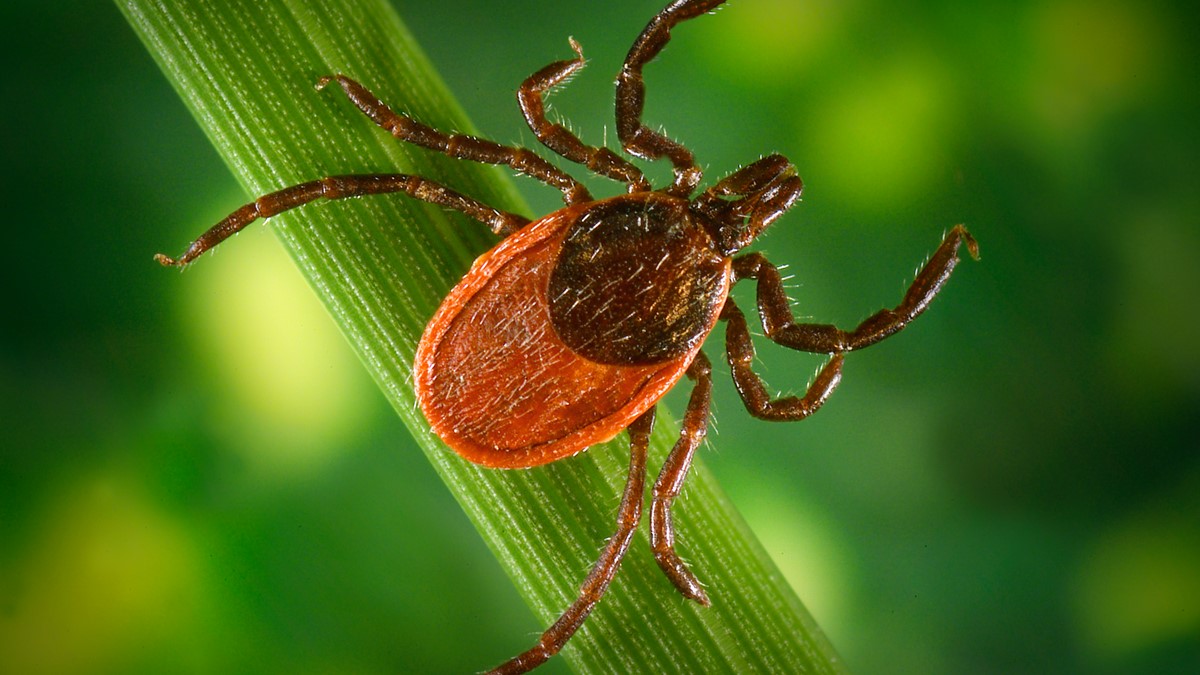
“Tick bites are often painless and easy to miss. Symptoms can appear days or weeks after a bite and may vary by the type of tick,” warns the B.C. government. If you think you may have been bit, watch for these symptoms:
- Fever or chills
- Headache
- Muscle or joint pain
- Unusual tiredness or weakness
- Numbness or tingling in the feet or legs
- Skin rash, including a bull’s‑eye pattern
Symptoms can progress overtime. It’s best to keep an eye on yourself or someone who has potentially been bitten by a tick. If you do have symptoms, it’s recommended to get medical help as soon as possible.
And if you can, bring the removed tick in a sealed container stored in the fridge or freezer to a doctor.
For more information on ticks and tick bites, head here.