
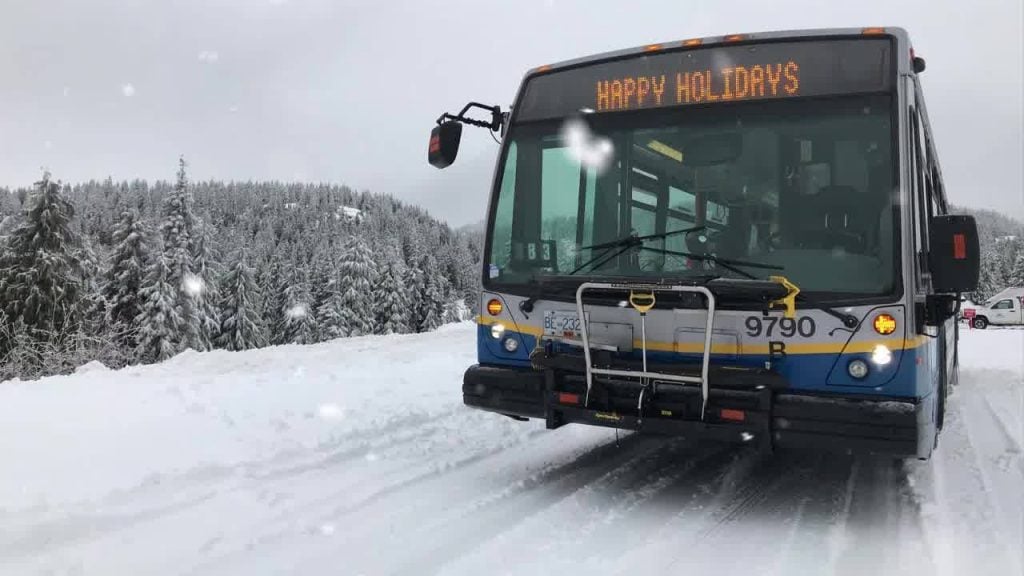
It seems like almost every year our public transportation system is forced to a halt during horrible fall and winter conditions.
Buses get stuck in snow, ice builds up on SkyTrain tracks and traffic is at a standstill.
RELATED:
- Higher Penalties For High-Risk Drivers In BC Go Into Effect This November
- Granville Island Is Getting Rid of Free Parking Next Spring
TransLink continues to strengthen its snow plans and hopes to be better prepared this year.
“Heavy snows can have a huge impact on our region,” said TransLink CEO Kevin Desmond.
“Our focus is to limit delays and disruptions, and safely get our customers where they need to go, whether by bus, train, HandyDART or SeaBus. And when service is affected by adverse weather, we’re committed to getting customers the information they need, when and where they need it, to ensure they have a positive travel experience.”
TransLink has met with counterparts at Metro Vancouver municipalities to discuss priority snow-clearing corridors.
The public transit service says that they continue to improve how they prepare, respond and innovate to better serve their customers.
[sjnow-ad-large-leaderboard]
How TransLink Is Prepared For Winter Conditions

[sjnow-ad-large-leaderboard]
SkyTrain
- Canada Line heat tracing and cover-boards – Installed two kilometres of heat tracing on power rail where heavy ice buildup caused service disruptions in February 2017. Also installed cover boards in exposed areas to protect the power rail from snow buildup. Both reduce risk of ice.
- SkyTrain de-icing – De-icer spray trains keep the power rail free of ice. During heavy overnight snow, some trains run through the night to keep tracks clear.
Bus
- Tire socks – If snow is heavy on Burnaby Mountain, we will deploy tire socks on buses between Production Way – University Station and SFU. This year, we will also use tire socks on 210 Upper Lynn Valley/Lynn Valley Centre and 232 Grouse Mountain/Edgemont if required.
- Trolley bus wires anti-icing trucks – These trucks spray anti-icing agent to the entire 300-km electric trolley overhead system if there is risk of frost/ice.
- Bus switch outs – If needed, we switch articulated buses for traditional buses. Articulated buses carrying lots of people, but 40-foot conventional buses have better traction on hills in snow.
HandyDART
- Prioritizing day programs – We contacted regular day programs in October to make them aware of HandyDART requirements for salting/sanding and access.
- Targeting difficult locations – We are reaching out to customers with problem driveways/access to see if they have a clearing plan.
- Extra staffing – When conditions require reduction to essential service, two drivers go with each bus to assist customers with loading/unloading.
Transit users should expect the occasional service disruption and ought to plan ahead for their daily trip.
[sjnow-ad-large-leaderboard]
