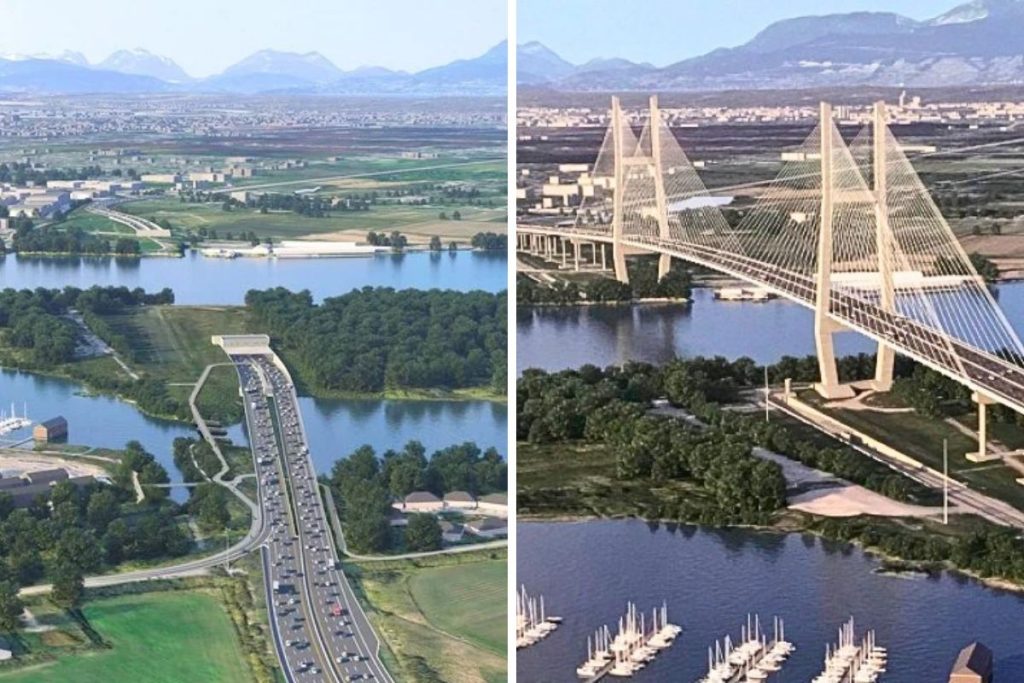
For decades, the George Massey Tunnel has been a major bottleneck for drivers travelling between Richmond, Delta and Surrey.
Despite years of promises and planning, a replacement remains years away, leaving commuters wondering why the project continues to change direction.
RELATED: Prime Minister Mark Carney Announces A Historic $1.2B Investment In Ocean Protection
Massey Tunnel Replacement History
For drivers travelling between Richmond, Delta, Surrey and the rest of Metro Vancouver, the George Massey Tunnel has been a familiar source of frustration for decades. Congestion, peak-hour backups, and accidents affecting access are almost daily features of traffic reports.
The replacement is intended to address congestion, safety, and capacity constraints. The current tunnel first opened in 1959, 66 years ago, and has long been overdue for an upgrade.
The first plans to replace the tunnel emerged in 2015, when the provincial government announced a 10-lane bridge estimated to cost $3.5 billion. However, following a change in government, the plan was cancelled.
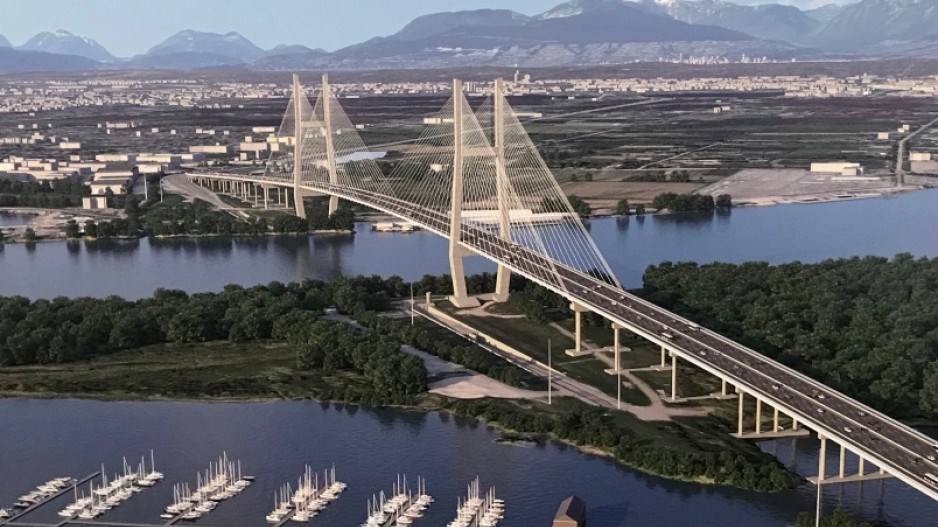
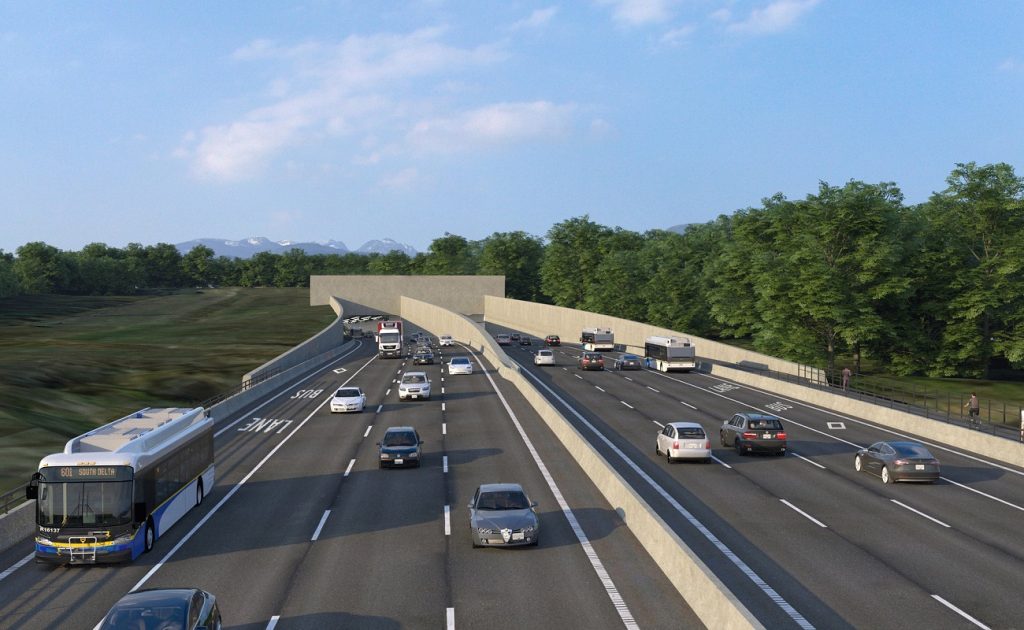
Then, in 2021, the province chose to move forward with an eight-lane George Massey Tunnel replacement project instead. The original estimate was $4.15 billion, with an opening target of 2030.
Recently, however, the tunnel project’s estimated cost rose to $8.5 billion, while further construction delays pushed the target opening date to 2031.
But the debate has returned yet again. On October 15, 2026, B.C. Conservative Leader Lorne Doerkson proposed returning to a 10-lane bridge if his party forms government. The proposal comes amid renewed scrutiny of the tunnel project’s rising price tag and delays.
Massey Bridge or Massey Tunnel: What would actually be better?
Although it would be easier to simply pick one, neither option is automatically the winner. The comparison needs to consider construction costs, safety, environmental impacts, transit, land use, and how quickly a new crossing can realistically open.
Option 1: A new bridge
- Pros:
- A bridge would carry traffic above the Fraser River and could provide a direct, high-capacity connection between Richmond and Delta.
- A bridge could avoid the complex process of installing a new immersed-tube structure beneath the river.
- Cons:
- A bridge would require long approach ramps and sufficient clearance for river traffic.
- Its approaches could affect surrounding farmland and green space.
- The actual cost and completion date would need to be established.
- Restarting the planning and environmental assessment processes could delay the project further.
Option 2: A new tunnel
- Pros:
- A tunnel would preserve more open space above the river crossing.
- A tunnel would include dedicated transit lanes, along with a separate route for pedestrians and cyclists.
- Early planning and assessments have already been completed, and construction is scheduled to begin in 2027.
- Cons:
- Constructing a large immersed-tube tunnel would be complex and costly, requiring careful management of river conditions, ground conditions, and connections to the existing highway.
- The project’s estimated cost has increased significantly.
Why is it taking so long to build?
There is no single reason. The project’s history points to a combination of changing political priorities, expensive infrastructure planning, environmental and land-use concerns, procurement difficulties, and shifting timelines.
Timeline of events
- In 2015, a bridge replacement was proposed.
- In 2017, the bridge proposal was cancelled following a change in government.
- In 2018, plans for the replacement were put on hold until 2020.
- n 2019, a group of Metro Vancouver mayors wrote to then-Premier John Horgan to voice their concerns and stress the need for a tunnel replacement.
- In 2023, the province shifted back towards a tunnel-based approach.
- In 2024, the project was finally set to move forward.
- In June 2026, the province ended its arrangement with Cross Fraser Partnership after the two parties failed to reach an agreement on the terms for final construction.
Each change has consequences. Projects require years of engineering, environmental assessment, land-use planning, and negotiations before major construction can proceed. When the chosen design or procurement strategy changes, some work may remain useful, but other decisions must be revisited.
Moving Forward
The recent debate is particularly frustrating for many locals because the region still needs a reliable crossing. The existing tunnel opened in 1959, and it no longer meets modern seismic standards or the region’s transportation needs.
The question is no longer simply whether a bridge or tunnel is better. It is whether the province can commit to a practical, affordable plan and deliver it without another major reset.
It is also important to recognize that a replacement could improve traffic flow through one of the region’s major bottlenecks, but it would not eliminate congestion across Metro Vancouver. Traffic could still build up at nearby highway interchanges.
Developing a transit plan will also be important. Dedicated bus services would provide commuters with a more reliable alternative to driving, reducing pressure on the road network over time.
After decades of discussion, Metro Vancouver needs more than another announcement. It needs a clear, evidence-based decision, a realistic budget, and a delivery plan that survives political change.
You might also like