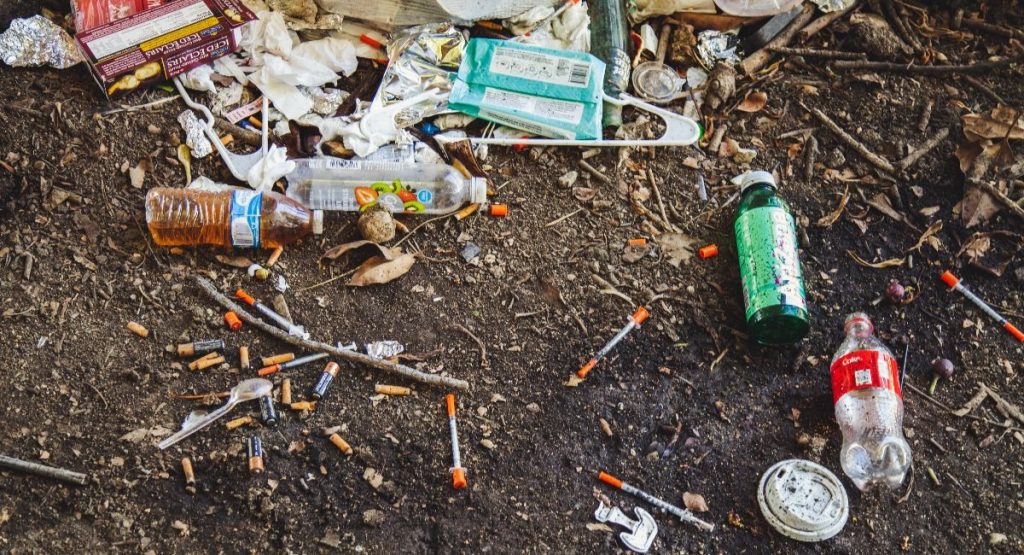
Vancouver has spent several years addressing issues related to public drug use, street disorder, mental illness and addiction.
These issues have been discussed by municipal and provincial governments, health authorities, police services, advocacy organizations, and the courts. At the same time, residents who are directly affected by public disorder in parks, transit areas and neighbourhoods have not been formally consulted through a citywide vote on policy direction.
That will change during the 2026 Vancouver municipal election.
On October 17, Vancouver voters will be asked whether the City should strengthen its bylaws related to open-air consumption of hard drugs in public spaces. They will also be asked whether the City should request that the Province establish a secure medical facility offering voluntary care and more than 100 involuntary care beds at the former St. Paul’s Hospital site or another comparable location.
The plebiscite is non-binding. Final authority over health care, mental health legislation and involuntary treatment remains with the Province of British Columbia.
Vancouver’s current approach is multi-component but uneven
Current responses to the toxic drug crisis in Vancouver include harm reduction services, treatment programs, supportive housing initiatives, and enforcement of existing laws.
Harm reduction services such as supervised consumption sites, overdose prevention sites, and naloxone distribution are part of the provincial and municipal response framework. These services are designed to reduce overdose deaths and connect individuals to health supports.
At the same time, the Province of British Columbia has reported record levels of toxic drug deaths in recent years, with more than 2,500 deaths annually in the province in 2023 and 2024 combined, according to the BC Coroners Service.
The system also includes detox beds, recovery programs, and mental health services, though access to these services varies by region and wait times have been reported in multiple health authority areas.
Public space regulation in Vancouver is governed by municipal bylaws, while drug possession and health treatment fall under provincial and federal jurisdiction.
Legal and jurisdictional context of the plebiscite
The City of Vancouver is permitted under the Vancouver Charter to place non-binding questions on a municipal ballot to gauge public opinion.
A non-binding plebiscite does not create legal obligations for the City or the Province. However, it can be used to inform policy direction and intergovernmental negotiations.
The Province of British Columbia is responsible for administering health care services, including mental health treatment, involuntary care under the Mental Health Act, and funding for treatment facilities.
In July 2024, the provincial government announced 132 new involuntary mental health treatment beds in Surrey and Prince George. These facilities are part of a broader expansion of secure care capacity in the province and are expected to open in phases through 2028.
Vancouver does not currently have a dedicated provincial involuntary treatment facility of comparable scale.
Involuntary care framework
Involuntary admission in British Columbia is governed by the Mental Health Act. Under the Act, individuals may be detained in hospital if they meet specific clinical criteria, including risk of harm to themselves or others and inability to seek voluntary treatment.
The use of involuntary care has been the subject of ongoing review by health authorities, legal experts, and advocacy organizations, including the Canadian Mental Health Association (BC Division), which has raised concerns about oversight, patient rights, and system capacity.
Any expansion of involuntary care would require compliance with existing legal standards, including clinical assessment requirements, review panel processes, and patient rights protections under provincial and federal law.
Proposed facility at the former St. Paul’s Hospital site
The ballot question references the former St. Paul’s Hospital site or another comparable location.
The site is currently in transition following the relocation of hospital services to the new St. Paul’s facility under construction. Any future use of the site for secure care would require provincial approval, capital planning, and redevelopment work, including potential seismic upgrades and compliance with health facility standards.
No finalized operational plan, budget, or timeline for such a facility has been released.
Policy considerations raised by the proposal
The proposal to expand secure care capacity in Vancouver intersects with several existing policy areas:
- Health system capacity and wait times for mental health and addiction treatment
- Public safety and enforcement of municipal bylaws
- Provincial responsibility for involuntary care under the Mental Health Act
- Housing availability for individuals exiting treatment or hospital care
- Indigenous health and overrepresentation in the mental health and justice systems
Data from BC Housing and Vancouver Coastal Health indicates that a significant proportion of individuals experiencing chronic homelessness in Vancouver also report concurrent mental health and substance use challenges.
Governance and decision-making context
Municipal governments in British Columbia do not have authority to create or operate involuntary treatment facilities independently. Any expansion of secure care would require provincial funding, legislation, and health system integration.
The City of Vancouver can, however, pass bylaws related to public space use and can formally request provincial action through resolutions or intergovernmental agreements.
The Vancouver City Council vote to place the plebiscite question on the ballot included both support and opposition among councillors, reflecting differing views on whether public consultation is an appropriate mechanism for this issue.
Policy debate context
Public policy discussions in Vancouver have included differing approaches to addressing addiction and public disorder, including:
- Expansion of harm reduction services
- Increased enforcement of public drug use bylaws
- Expansion of treatment and recovery beds
- Development of supportive housing
- Proposals for secure or involuntary care facilities
These approaches are not mutually exclusive and are often implemented in combination across different jurisdictions.
Summary of ballot questions
Voters will be asked two questions:
- Whether the City should strengthen enforcement of bylaws related to open-air consumption of hard drugs in public spaces.
- Whether the City should request that the Province establish a secure medical facility with voluntary and involuntary care capacity in Vancouver or a comparable site.
The results will be non-binding but may be used by City Council in future policy discussions with the Province of British Columbia.
You might also like