Whether or not you care for it, artificial intelligence is here and it may be coming to Vancouver.
Under a planned partnership between the federal government and Telus, Vancouver and Kamloops are slated to become the sites of data centre clusters. It’s expected to expand on Telus’ Kamloops facility, including two new AI data centres to be built in Vancouver via the government’s Enabling large-scale soverign AI data centres plan.
But not everyone is happy to see these AI data centres, with them attracting both global and local criticism.
AI Data Centres in Vancouver: Protests From Locals
Since the announcement of the AI data centres, multiple demonstrations have taken place in Vancouver throughout late May-June, and again in September-October. Hundreds took to the streets to protest the AI data centres as they called for the partnership to be halted, citing concerns about water usage, environmental impacts, and strains on the local electric grid.
A petition against the proposed AI data centre had also collected more than 15,000 signatures by late June.
View this post on Instagram
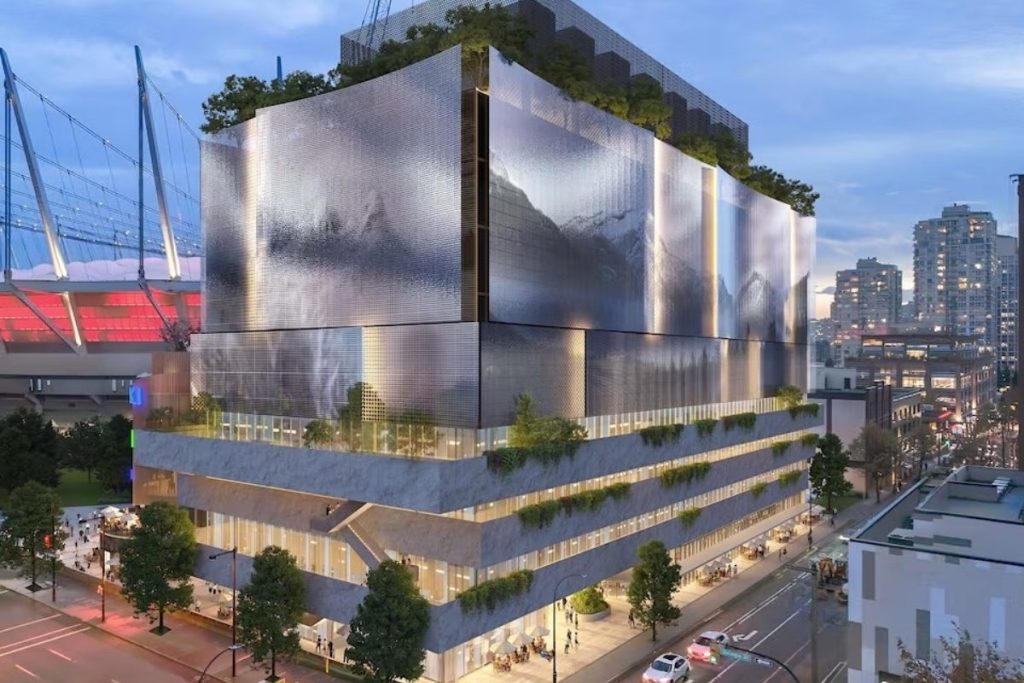
The first AI data centre is planned to be built at the former Hootsuite headquarters in Mount Pleasant, which will come later in 2026. The following facility will be located at 150 West Georgia Street. Reportedly, the project will start with an 85 megawatt power draw, and it will scale up to 150 megawatts by 2032.
According to B.C. Premier David Eby, the environmental impacts of these AI data centres is part of the calculations. He said, “That’s a concern of mine as well, which is why ensuring these data centres are not mass consumers of water is a key interest… I just want to reassure people that we have those regulations in place and that is key for British Columbia in terms of any centres going forward.”
Resource Concerns & Protests
The main concerns around AI data centres are focused on how much resources they require.
These massive facilities require huge amounts of electricity to power the computers behind AI. They can also use large amounts of water to keep equipment cool, raising concerns in communities already dealing with high energy demand and water shortages, particularly as B.C. faces drought conditions and water restrictions.
A recent Canada West Foundation report says large data centres can use up to 5 million gallons of water per day— comparable to the needs of a city of about 50,000 people. It also notes growing concerns around electricity, water and land use in Western Canada.
Telus says its Vancouver facilities will use closed-loop cooling technology, which it estimates will reduce water use by about 90% compared with traditional data centres. However, opponents remain concerned about how much water the facilities will still require.
Critics are also worried about the environmental impact of building these facilities, including the land, concrete, metals and computer hardware they require.
For some communities, the big question is whether the jobs and economic benefits from AI data centres are worth the added pressure on local resources and infrastructure.
Online and Global Skepticism
Online, people have voiced their concerns about the planned AI data centres, as well. In a Reddit thread, a commenter said that “It makes zero sense to build in the most densely populated area of BC when there are lots of viable cheaper alternatives.”
Another wrote, “Conventional data centres? Yes, those are fine. AI data centres? No, those are a blight. Just research the community reactions to nearly any place these job, soul and environment killers have been built.”
What do you think about Vancouver’s potential AI data centres?