British Columbia’s wildfire situation remains active, with the latest B.C. Wildfire Service data warning of a high potential for lightning-caused wildfire starts, particularly across the Central Interior and Okanagan.
On August 8, 2026, the fast-moving Bald Range wildfire near Summerland expanded rapidly, forcing more than 20,000 people to evacuate. In response, Premier David Eby declared a state of emergency in British Columbia, giving officials additional powers to respond swiftly and effectively to the crisis.
RELATED:
- B.C. Declares State of Emergency as Wildfires Force Thousands to Evacuate
- Here’s How Wildfire Smoke Might Be Affecting Your Brain
B.C. State of Emergency 2026
This is one of the few times B.C. had declared a provincewide emergency specifically because of wildfires.
Here’s how the recent history breaks down:
- 2026: The province declared a state of emergency on August 8 as the Bald Range wildfire near Summerland expanded rapidly, prompting widespread evacuations.
- 2023: B.C. declared an emergency during what became the province’s most destructive wildfire season on record. Nearly 29,000 square kilometres burned across the province.
- 2021: A provincewide emergency was declared on July 21 during a brutal heatwave and devastating wildfire season. The village of Lytton was largely destroyed by wildfire that summer.
- 2018: The emergency was declared on August 15 as wildfire activity surged, with more than 560 fires burning at the same time at the peak of the season.
- 2017: B.C. declared a wildfire state of emergency on July 7 — the first time the province had done so in 14 years. The emergency remained in place for about 10 weeks as a record-breaking fire season unfolded.
- 2003: B.C. declared a provincial state of emergency during the severe wildfire season.
It’s worth noting that B.C. also declared states of emergency in 2020 and 2021 for other major events, including the COVID-19 pandemic and catastrophic flooding. Those declarations were not related to wildfires.
2026 B.C. Wildfire Season
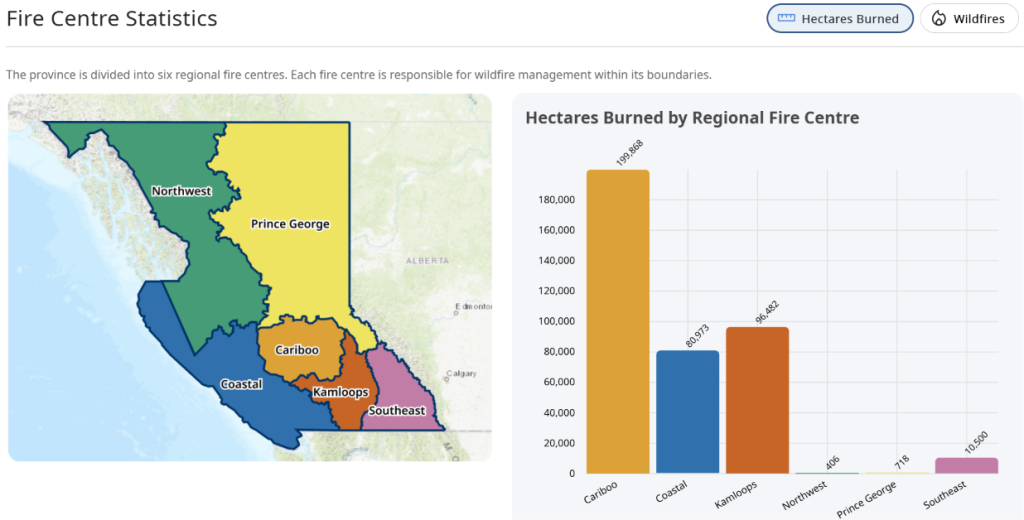
According to the latest B.C. Wildfire Service dashboard, updated August 10, here are the statistics so far for the 2026 season.*
- Wildfires Started: 901
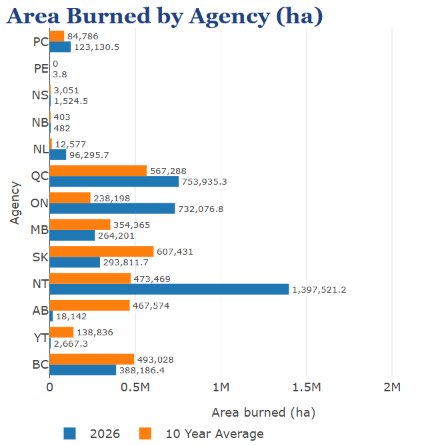
- Hectares Burned: 388,962
- Extinguished Wildfires: 799
- Wildfire Causes:
- Lightning: 456 (51%)
- Human: 416 (46%)
- Undetermined: 29 (3%)
- Firefighting Personnel: 1724
The immediate concern is new fires from lightning, especially in the Interior. With the wildfire season still underway, officials continue to warn that conditions can change quickly.
For anyone heading out camping, hiking or spending time in the backcountry, it’s a good reminder to check the latest wildfire information before heading out — because in B.C., wildfire season is definitely not over yet.
NOTE: The wildfire dashboard is updated regularly and may differ depending on when this article is viewed. It currently tracks fires across the province, with residents able to monitor active incidents, fire perimeters and other wildfire information in their area. While the dashboard provides an up-to-date look at wildfire activity, B.C. Wildfire Service notes that its map is designed to keep residents informed about the current wildfire situation and is not intended to be used as a wildfire risk assessment tool.
B.C. Wildfire Historic Comparison
B.C.’s wildfire season usually runs from May through October, with July and August typically being the peak months. At a glance, the latest 2026 dashboard doesn’t necessarily mean B.C. is headed for another record-breaking season, but the conditions are worth watching.
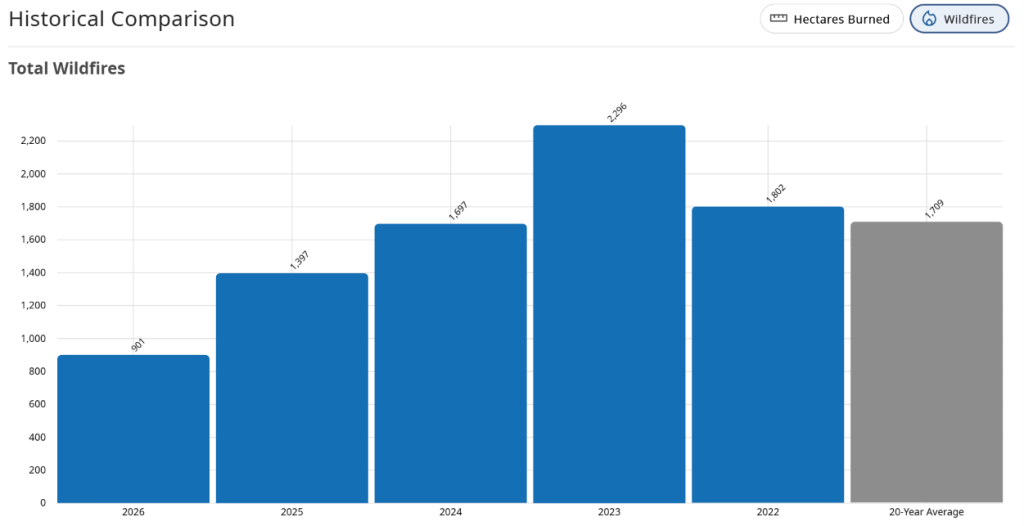
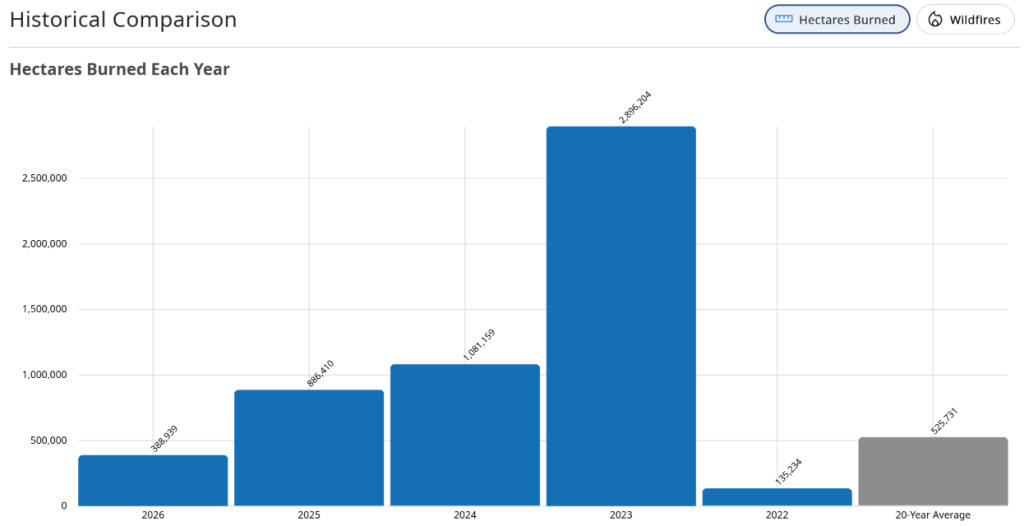
In 2025, more than 1,350 wildfires burned an estimated 886,360 hectares across the province. That was a significant season, although it was less destructive than 2023 and 2024.
For comparison, 2024 saw 1,697 wildfires and about 1.08 million hectares burned, while 2023 was an extreme outlier, with 2,293 wildfires burning roughly 2.84 million hectares.
The longer-term picture is pretty striking, too. B.C.’s current 10-year average is about 1,527 wildfires per season, with roughly 40% caused by people and 60% by lightning. However, the number of fires, as well as the hectares burned in the past few years has been above average.
Current Wildfire Status in Canada
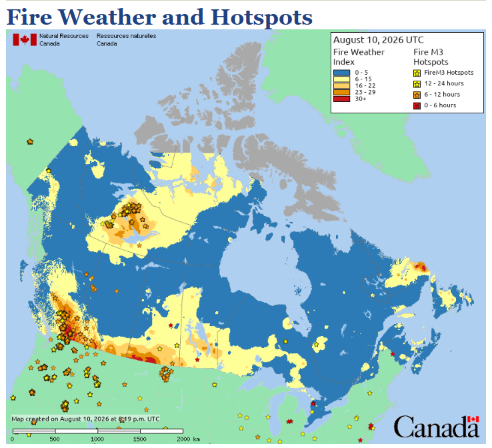
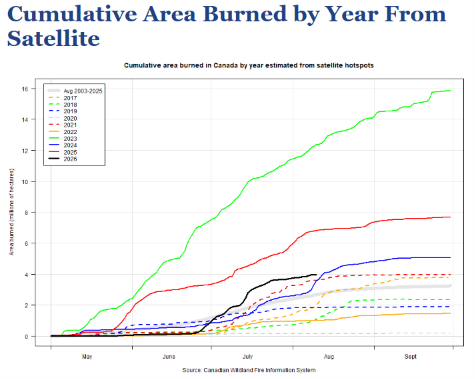
According to Government of Canada, here is a summary of the 2026 Wildfire season as of August 10th, 2026:
- Wildfires to date: 4621
- Hectares Burned to date: 4,071,978,1
How You Can Help
If you’re looking to support people affected by the wildfires, financial donations are one of the most helpful ways to contribute. Established organizations can get funds where they’re needed most and support communities with immediate and longer-term recovery.
While donating supplies may seem helpful, physical items can be challenging to collect, transport, store and distribute during an active emergency.
If you’d like to donate, you can consider supporting:
You might also like