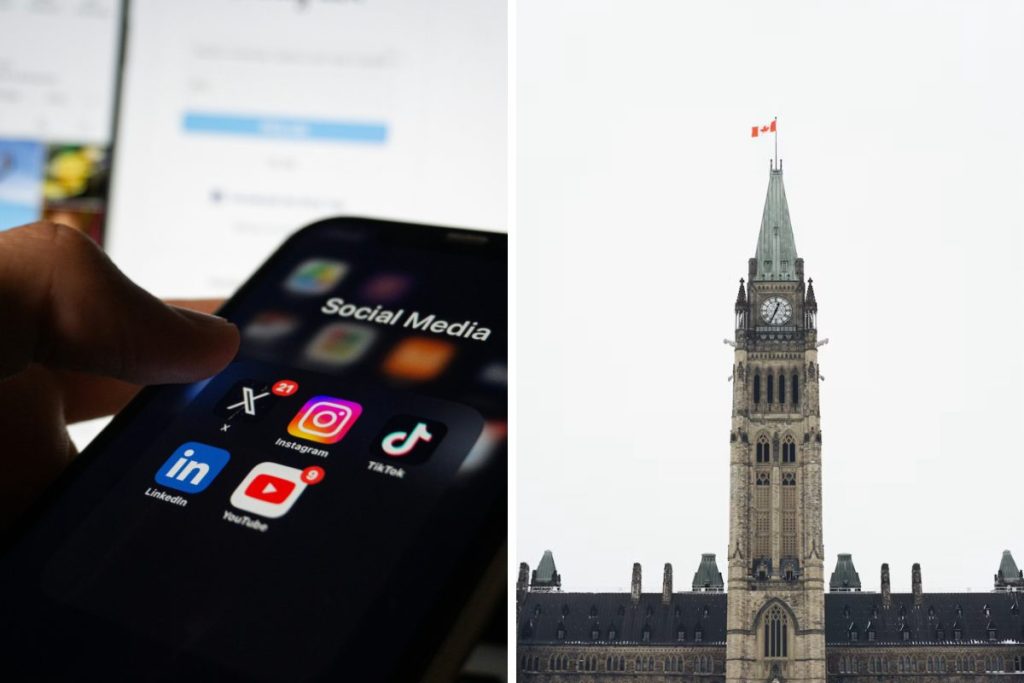
Should kids have access to social media?
It’s a hot topic that doesn’t have a very cut and dry answer, although some countries have already worked toward banning under-16-year-olds from using the platforms. Back in December 2025, Australia was the first to implement a country-wide prohibition on teenagers using social media, and other countries have considered doing the same— including Canada.
RELATED:
- Canadians Could Get Money From A $1.25-Million Apple Settlement
- How To Claim Up To $1,000 When Airlines Blame Your Delay On Maintenance
Bill C-34 is Canada’s own version of Australia’s social media ban, but it’s come into question as to how it will be implemented, if at all.
Social Media Bans
Australia’s Prohibition
Australia’s social media ban outlines that under-16s are outright banned from using major social media services. This includes TikTok, Facebook, Instagram, YouTube, Snapchat, Threads, and X. Any existing profiles were deactivated once the ban was implemented, and no new accounts can be made.
The primary goal of the ban is to reduce the negative impact of social media on youths. According to the Australian government, social media is designed to encourage young people to “spend more time on screens, while also serving up content that can harm their health and wellbeing.”

A commissioned 2025 study found that 96% of children aged 10-15 used social media. Seven out of 10 of them had been exposed to harmful content. This ranges all the way from violent material to content that promotes eating disorders.
Cyberbullying and grooming behavior was also often reported.
Bill C-34
Bill C-34, called the Safe Social Media Act, was unveiled in June 2026 in the House of Commons by the Minister of Canadian Identity and Culture Marc Miller. The bill would also create a new independent regulator, the Digital Safety Commission of Canada.
The legislation would make social media services and AI chatbots legally accountable for building platforms that are “safe by design” and prioritize children’s safety.
But a major question remains: how will people verify their ages? At the October 29, 2026 debate in the House of Commons, Conservative MP Jacob Mantle pushed against the ban, claiming that a social media prohibition would be a poor idea before a new regulatory body became fully operational.
Imposing the ban before all of that is ready would have serious consequences. There would be no standards for age verification, no privacy review, no exemptions and likely no or little enforcement. Perhaps most obviously to me, it would mean that millions of Canadians would be required to verify their age immediately, even though regulated platforms may later be exempt from age verification. That makes little sense to me.
Currently, Bill C-34 does not have defined timeline for when these changes could come into effect. For now, adults won’t have to prove their age to access social media, but they may in the future if the bill passes.