The new U.S. tariffs are officially here, but what does that really mean for the average Canadian citizen? How about the average British Columbian? Will any of this actually impact you?
That’s dependent on a number of factors, although B.C. is certainly being hit harder than other provinces by the tariffs. From job losses to major industry troubles, here’s how the tariffs could affect you.
RELATED: Canada Just Revealed A Huge List Of U.S. Products Getting Hit With Tariffs
U.S. Tariffs: How They Could Affect B.C.
Industries Hit by Tariffs
One of B.C.’s biggest exports is lumber, which spells bad things now that the U.S. 50% tariffs are in place. According to a CBC analysis, the province is heavily impacted by paper and wood tariffs, representing over 13% of B.C.’s exports to the U.S.
For those in the lumber industry, the tariffs will likely be felt quite keenly. But other industries like electronics and electrical equipment producers, as well as plastics, will also feel the pain of tariffs. Most of the manufacturing for those sectors are located east in Ontario and Quebec.
Job Losses
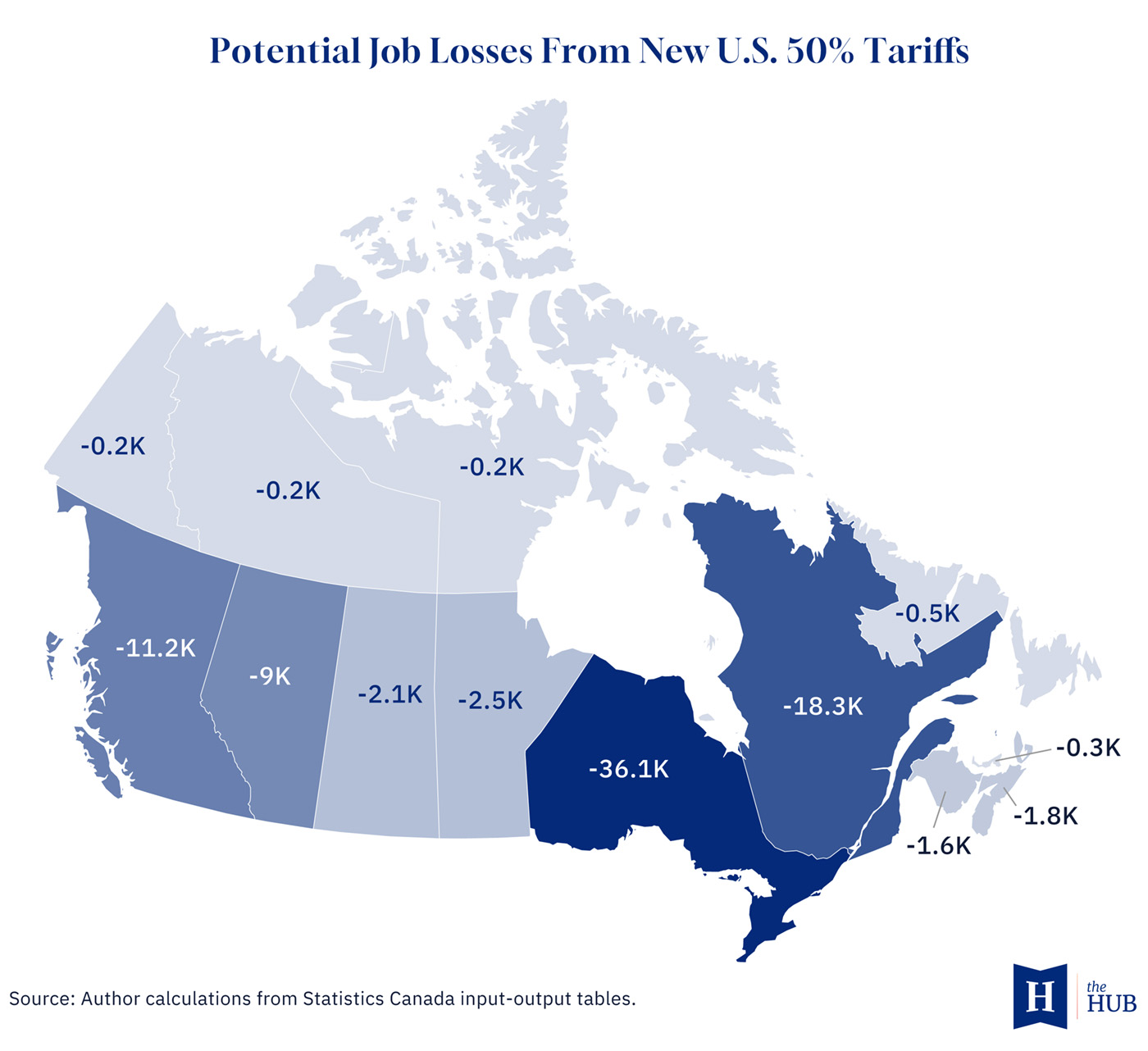
In an already difficult job market, Canada could reportedly lose a total of 87,000 jobs due to the tariffs. This analysis comes from University of Calgary economics professor Trevor Tombe, who says that around 52,000 jobs are directly at risk, with the other 35,000 at indirect risk.
I estimate that over 52,000 jobs in Canada are directly at risk of loss. Adding jobs at suppliers and service providers to those exporters brings another 35,000 into play, for a total of a little over 87,000 across the country. Against a current unemployment rate of 6.4 percent, losses on that scale would push the rate up by roughly 0.4 points, to 6.8 percent.
Places with concentrated tariffs such as B.C., Ontario, and Quebec will see the highest job losses. B.C. could see up to 11,200 jobs lost due to the tariffs.
Unsureness Across the Country
Despite all these calculations that are trying to add up what the total damage these tariffs will do to Canada, it’s hard to say exactly what will come of them.
“Precise numbers are difficult, since much depends on how businesses respond. Given the uncertainty surrounding U.S. trade policy, many firms may not view these tariffs as permanent,” said Tombe.
Canada has already put into motion its own plans to retaliate with dollar for dollar counter tariffs. They will be effective as of 12:01am, September 8, 2026.