

Kumar Shahani found out an overdose prevention site was opening two blocks from his home the same way most of his neighbours did: a Facebook post, shared by a friend, weeks after the decision had already been made.
“At no point were any of the residents or strata council in the immediate vicinity contacted by VCH or the city about this issue,” he said.
The proposed overdose prevention site at 900 Helmcken St. is not a City of Vancouver decision. It is a provincial initiative, led by Vancouver Coastal Health (VCH) under the authority of the Province of British Columbia. The lease, location and timing were determined by the Province and VCH, not by Vancouver City Council or City Hall. City officials, including Mayor Ken Sim and several councillors, have publicly raised concerns about the process and have called for greater community consultation.
Vancouver Coastal Health (VCH), a regional health authority operating under the direction of the Province of British Columbia, announced on May 5 that it would relocate its Thomus Donaghy Overdose Prevention Site to 900 Helmcken St., across from the Sheraton Wall Centre. It would be the third location for the site in four years, following stints on Seymour Street and Howe Street that ended amid lease disputes and neighbourhood complaints.
The lease term was set to begin June 1. Within weeks, opposition from residents, businesses and Vancouver City Council had escalated into a public standoff with the Province. Council passed a motion directing staff to use “every tool in the toolbox” to block the site.
On May 27, Health Minister Josie Osborne announced VCH would not proceed with the Helmcken site “at this time,” with no opening date planned.
In a statement, Osborne and Terry Yung, Minister of State for Community Safety and Integrated Services and MLA for Vancouver-Yaletown, said they had “heard concerns from the city, local businesses and community partners” and were “committed to taking steps to fully engage with stakeholders and community ahead of any new site opening.”
Despite the pause, RainCity Housing, the non-profit contracted to operate the site, took over the building lease on June 1 and has continued maintenance and improvement work, according to VCH. That has left the building’s future in limbo more than a month later. According to residents, some construction and interior work began only days after the Province announced the project would be paused, further adding to confusion about whether the site is moving forward.
What residents and businesses say
Shahani said his objection is not to overdose prevention sites as a concept. He supports them and has donated to similar programs, including the one at the Dr. Peter Centre on Comox Street.
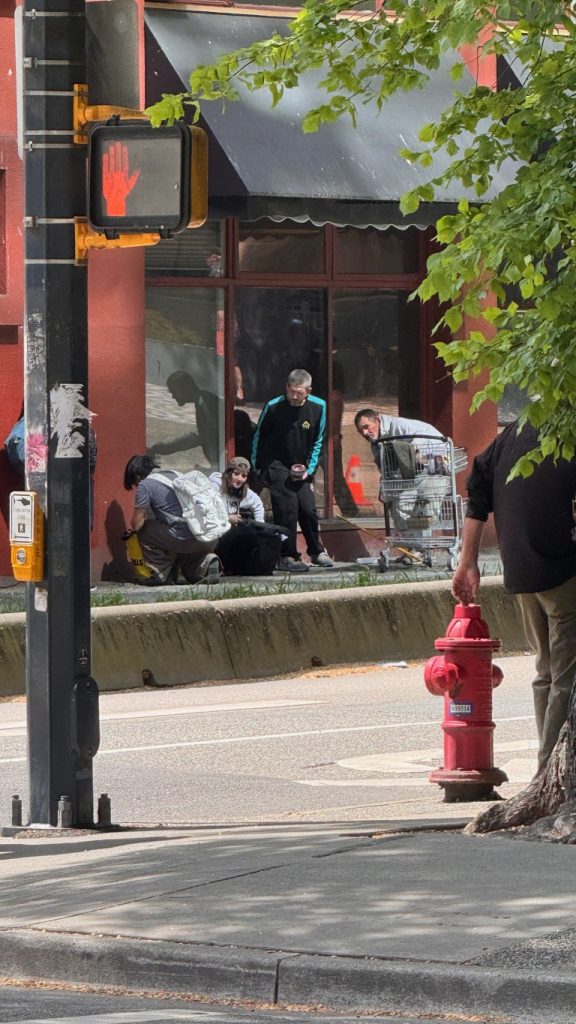
His concern is specific to the Helmcken location. The corner of Helmcken and Hornby, he said, is a high-traffic corridor where buses, taxis and cyclists move quickly. He believes people leaving the site, some of them visibly impaired by drug use or withdrawal, would be at risk while crossing the street.
“Folks using the OPS site are often bent over from the drugs or the withdrawal and it is not uncommon to see some of them run across the street and nearly get run over,” Shahani said.
He contrasted the location with the Dr. Peter Centre, which he described as being in a lower-traffic area where people can cross more safely.
“What is the point of preventing an overdose only to let them get run over by a vehicle?” he said.
Shahani said meaningful consultation would have included a site inspection, a traffic study and baseline crime and policing data shared with the community before a decision was made, not after. He said he has noticed more people congregating in the area since the announcement.
Sunan Spriggs, founder of CityLux Boutique near the proposed site, said she learned about the plan in May, when community members organized a rally, rather than through any direct outreach.
“I was not contacted or consulted before the announcement, despite operating a business in the immediate area,” she said.
Spriggs’ opposition is broader. She said she opposes supervised consumption sites generally, arguing that public money would be better spent on long-term, mandatory addiction treatment and rehabilitation.
“The goal shouldn’t be to help someone inject more safely. The goal should be to help them stop injecting altogether,” she said.
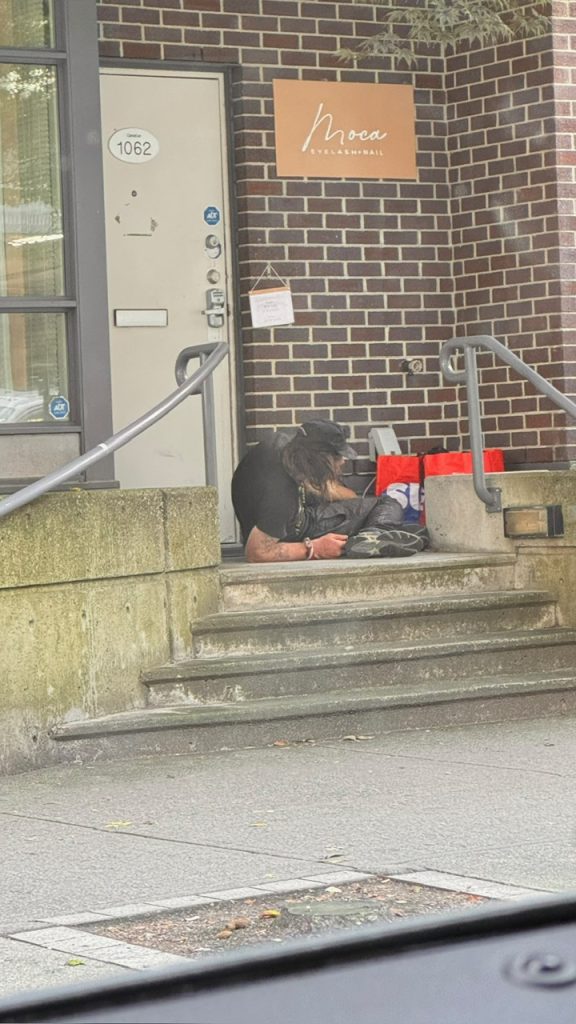
Spriggs said she has documented, through what she described as hundreds of videos, instances of loitering, drug use and impaired customers near her store, along with theft and vandalism she attributes to the surrounding conditions.
Several other residents near the site were contacted for this story but declined to be quoted.
Vancouver City Councillor Peter Meiszner, who supported the motion to block the site, described conditions near the two previous locations.
“I literally witnessed fist fights and violent situations outside, open drug use, a massively increased number of police calls in the neighbourhood, predatory drug dealers waiting for clients. Frankly, it’s been a disaster,” he said.
Meiszner has also said the sites reduce overdose deaths but argued that people using them are not being adequately connected to treatment.
What VCH says
Vancouver Coastal Health said RainCity Housing assumed responsibility for the lease at 900 Helmcken as of June 1 and is currently carrying out maintenance, general improvements and repairs at the site.
VCH also said it and RainCity are not proceeding with an overdose prevention site at 900 Helmcken St. “at this time,” and are committed to engaging with stakeholders prior to opening any site in the future.
The health authority added that it is committed to providing a comprehensive continuum of substance use care as part of the provincial Road to Recovery initiative.
VCH has previously said overdose prevention sites are “evidence-based harm reduction services that can reduce the risk of death, help connect people to treatment, while also providing an alternative to public drug use.”
The health authority has also said the previous Helmcken-area location recorded approximately 150,000 visits and responded to 480 overdoses before its lease was not renewed.
What police data shows from a previous OPS site
While the Helmcken proposal has been paused, Vancouver Police Chief Steve Rai has pointed to data from a previous overdose prevention site at 1101 Seymour Street as a relevant comparison when assessing potential impacts on surrounding neighbourhoods.
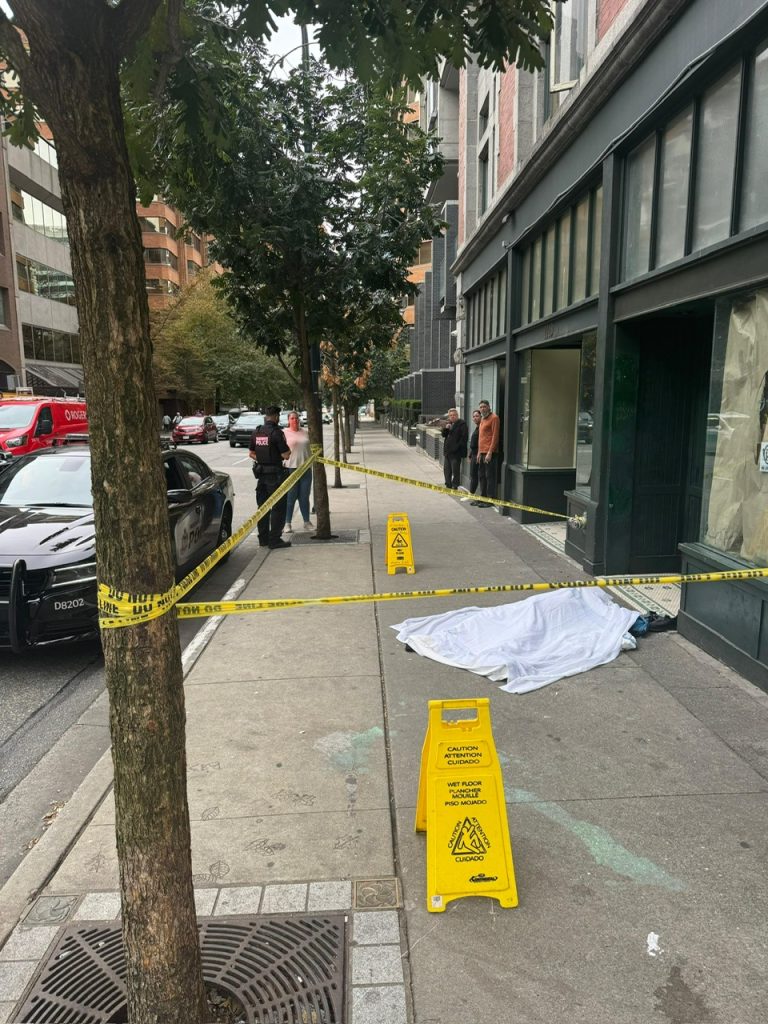
According to information provided by the VPD, the introduction of the OPS at Seymour Street was associated with a 51.3 per cent increase in calls for police service in the surrounding area. Police said that once the site was removed, calls for service returned to pre-OPS levels.
The VPD also reported that during the first year of operations at that location, violent crime in District 1 increased by 13 per cent, suggesting impacts that extended beyond the immediate block.
Chief Rai has described the disruption to the neighbourhood as significant, citing increased demand on police resources, street disorder and public safety concerns reflected in the data.
Taken together, the VPD’s position is that the Seymour Street OPS was associated with measurable increases in calls for service, crime in the immediate area, and violent crime across the broader district. Police have said the data provides a relevant point of comparison when evaluating similar facilities in dense urban settings such as 900 Helmcken.
Where things stand
As of right now, no opening date has been set. Neither VCH nor the Province has said publicly what the promised engagement with residents and businesses will involve or when it will begin. While the project has been described as “paused,” residents say they have observed construction activity beginning at the site only days after that announcement, raising further questions about the current status of the plan.
